
One control stack, from greenhouse to walk-in
Controlled environment agriculture, greenhouses, and outdoor farms, alongside commercial facilities with leak protection, refrigeration monitoring, and air quality. One closed-loop stack from sensing to valve.
Closed-loop crop steering, room by room.
Indoor rooms and vertical farms give you control over every variable. Serious operators steer the plant instead of irrigating on a fixed schedule. Growbud runs that strategy automatically: dry-back targets per stage, pulse irrigation by zone, and Pore EC tracked in real time across stone wool, coco, and peat.
Probes hold their calibration in saline hydroponic systems, and you can check any reading against pot weight in ten minutes. Edge runs the loop on site even when WiFi fails. The same stack scales from one room to multi-facility operations.
Automated dry-back targets
Hit gen and veg dry-back curves without watching the dashboard. Pulses fire from real VWC, every cycle.
Pore EC under control
Track and steer feed strength continuously. Catch lockout and salt buildup before they show on the plant.
Calibration that holds
Probes hold calibration in high-salinity slabs and reservoir-fed systems where standard sensors fail in months.
Reservoir pH and EC on the same bus
Wire pH and EC probes into the Controller over RS-485 Modbus and the valve outputs can run dosing pumps, so feed strength is corrected from a measurement instead of a morning check.
Recommended Hardware
Uniform dry-backs across every bench.
Greenhouses depend on uniformity. Microclimates between zones, sun on one wall, and drip lines that drift over a season all create variance in yield and shelf life. Growbud closes the loop bench by bench so every zone hits the same target.
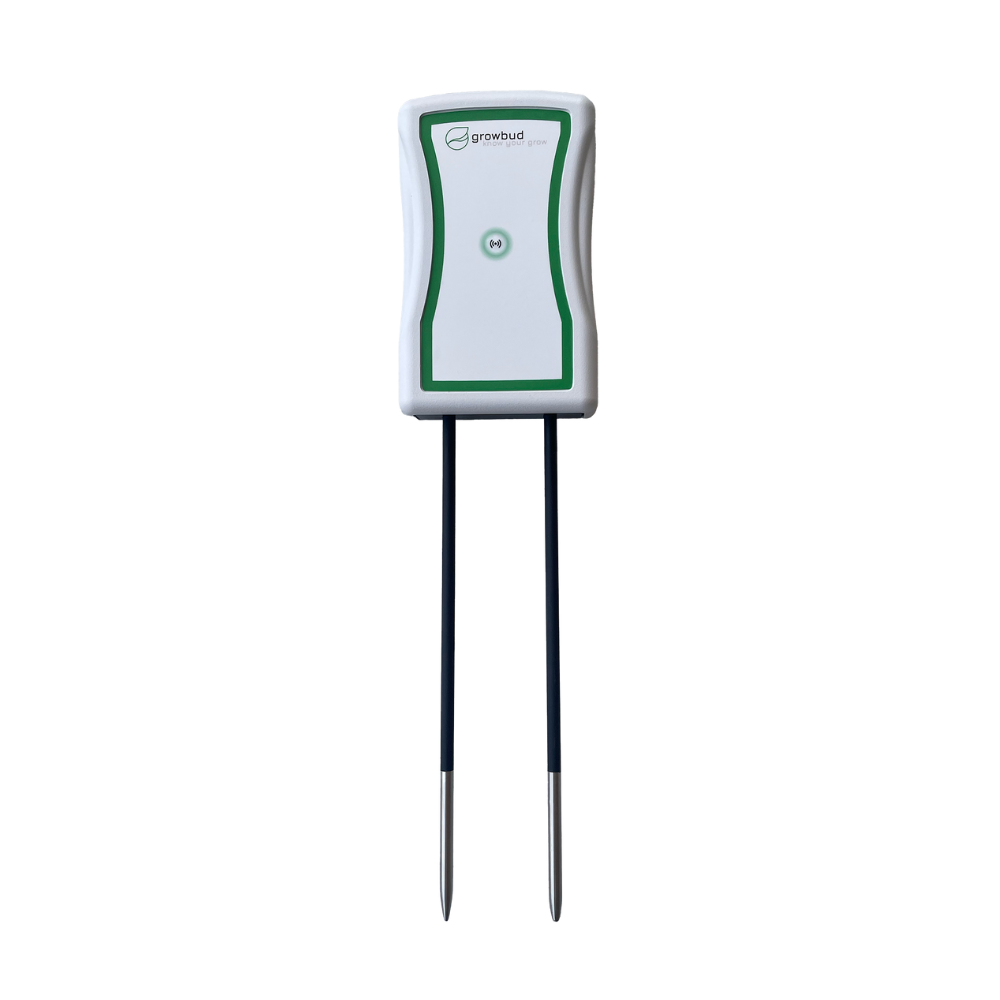
Reservoir pH and EC probes wire straight into the Controller over RS-485 Modbus, alongside flow meters and whatever else already speaks it, so the feed you mix and the feed the roots see are measured on the same system.
Substrate readings drive irrigation decisions automatically. AI predictions anticipate dry-down. Edge keeps controlling even if the office router goes down. Labor that used to walk rows with a moisture probe moves to higher-value work.
Zone-by-zone control
Drive each bench independently from one dashboard. Stop averaging across non-uniform conditions.
Labor savings
Replace manual probe rounds and timer adjustments with control logic that runs 24/7 on site.
Substrate + climate together
Combine root-zone data with environmental readings so feed and irrigation track plant demand, not the clock.
Recommended Hardware
Vineyards, orchards, and berry blocks, watered on the numbers.
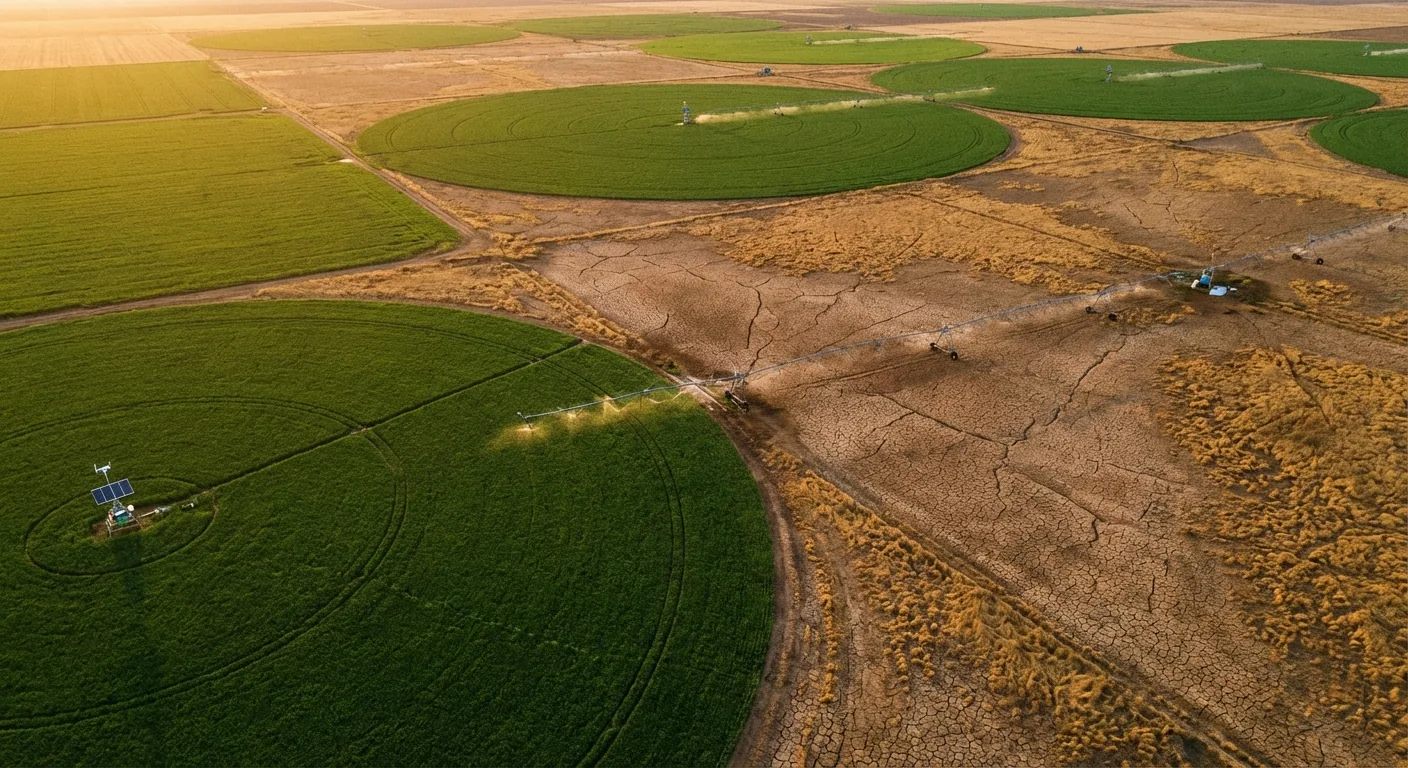
Outdoor acreage is where irrigation guesswork costs the most. Deficit-grown wine grapes, almond and citrus blocks under salinity pressure, and berries whose brix and pack-out swing with a few hours of water stress all need better control. Growbud replaces the calendar with substrate-driven control per block, matched to what the roots are doing.
Solar-powered LoRa gateways span the property without WiFi or trenching. Edge sits at the pump house and drives valves to the strategy you set, per block and per varietal. AI predictions flag dry-down or stress before the plants show it. The open API connects to the irrigation controllers and fertigation skids you already own.
Per-block strategies
Regulated deficit irrigation for grapes, leaching fractions for nuts, VWC bands for berries. Different targets per block, one platform.
Trustworthy in salinity
EC and moisture readings stay accurate where reclaimed water and high-salt soils degrade standard sensors.
Coverage without trenching
LoRa reaches across the acreage. Edge keeps controlling at the pump house even when the cell tower drops.
Recommended Hardware
A shutoff that proves it closed.
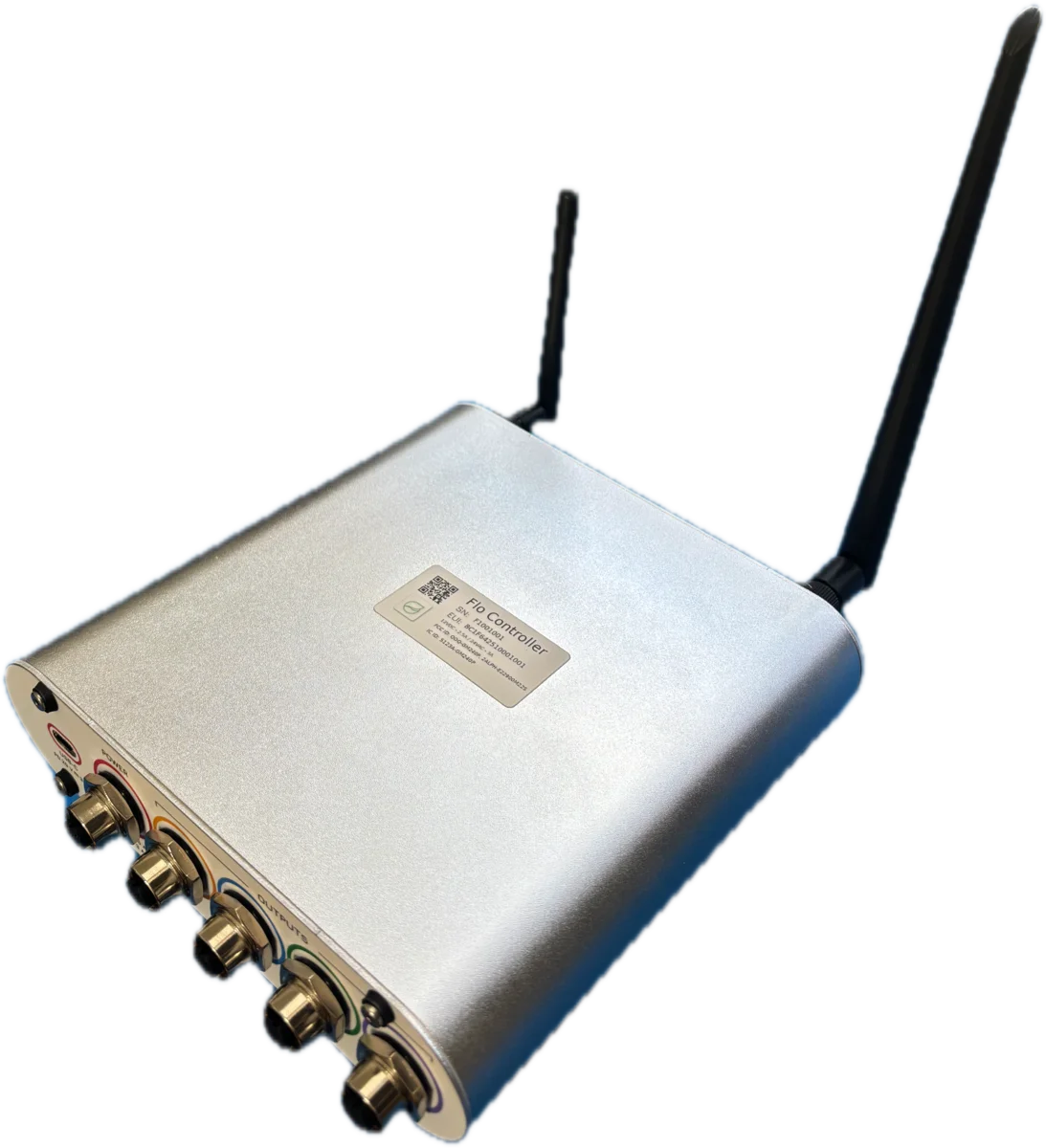
Plenty of systems will send a close command. Almost none will tell you what happened next. The Growbud Controller closes the supply valve, watches flow to confirm it actually stopped, and raises a separate alarm if it didn't, because a valve that silently fails to seat is the failure that floods the building anyway.
Install leak sensors in boiler rooms, mechanical rooms, and under water heaters, the places nobody walks through on a Sunday. Detection, shutoff, and confirmation all run on the Controller itself, so the sequence completes during an internet or cloud outage instead of waiting on a server.
It speaks Modbus RTU, native BACnet, and CANopen, the languages your BMS and plant equipment already use, and joins existing building automation as a first-class device with commandable valve, pump, fan, and lighting points. The same RS-485 bus takes any Modbus device you want to put on it: air quality, DIN-rail energy meters, flow, temperature. Water and power land in one place instead of two systems that never talk.
Air quality sensing
Temperature, humidity, VPD, and CO2 monitoring that feeds the BMS in real time from one sensor network.
Verified shutoff
Close the valve on a leak, confirm flow reached zero, and alarm if it didn't. You find out the valve is stuck before the flood, not after.
Pumps, lights, and fans
Relay-controlled devices run on schedules or sensor triggers from a single dashboard.
BMS integration
Speak Modbus or BACnet over RS-485. Growbud fits the building management system you already run.
One meter tells you what a machine is doing.
Almost everything in a building is electrical, and every electrical thing reports its own condition through the current it draws. Pumps, compressors, chillers, fans, dehumidifiers, RO skids, lights, heaters, CO2 generators. You do not need a purpose-built sensor for each one. You need a meter on the circuit.
Wire a Modbus RTU energy meter to the Controller's RS-485 bus and it joins as a first-class sensor, the same as a substrate probe or a leak rope. Runtime, duty cycle, and draw are logged continuously, so you can see a compressor short-cycling, a motor pulling harder than it did last month as a bearing goes, or a pump that never actually started.
The Controller accepts any Modbus device, and speaks CANopen as master or slave for actuators and other industrial control, so you are not restricted to hardware we sell. Pick the meter that suits the panel, whether single-phase, split-phase, or three-phase, and it lands in the same dashboard, the same history, and the same BACnet points as everything else.
A universal sensor
Anything with a motor, a compressor, or a heating element is already telling you how it is doing. A meter is how you listen, without instrumenting each machine.
Failures announce themselves early
Short cycling, rising draw, a longer run to reach the same setpoint. Equipment degrades measurably before it stops, and current is where it shows first.
Runtime and duty cycle, logged
Know what actually ran and for how long, rather than what the schedule said. Real energy, measured with voltage and power factor, not estimated from amps.
Any Modbus meter
DIN-rail meters from any vendor drop onto the same RS-485 bus as your other sensors. No proprietary hardware, no separate portal to log into.
Recommended Hardware
Protect every location from leaks, power problems, and refrigeration failures.
A burst line closes the dining room, and the cost is the days you're shut, not the plumber. The Growbud Controller closes the supply valve on a leak, confirms flow actually stopped, and alarms if it didn't, locally, without waiting on a cloud service. Split-core energy meters clip around the panel feed and the big loads without rewiring, so every location reports what it burns. Walk-ins, plumbing, power, air quality, and critical equipment all report to the same platform.
Central alerts, historical reports, and escalation work across an entire restaurant portfolio, and everything keeps running with or without internet.
Monitor power
Meter the compressor, the pump, and the panel feed. Short-cycling, a motor pulling harder as a bearing goes, and equipment left running overnight all show up in the current first, and the kWh history shows which location wastes energy.
Prevent water damage
Detect the leak, close the valve, and confirm flow actually stopped. A shutoff nobody has ever tested is a hope, not a control.
Protect inventory
Walk-in temperature, door, compressor-power, and condensate monitoring. Know a cooler is failing hours before the product does.
Monitor every location
Central alerts, historical reports, and escalation across the whole portfolio, from one dashboard.
Water greens, fairways, and fields on the numbers.
Golf courses, sports fields, and municipal turf run on tight water budgets and tighter playability standards. Growbud maps root-zone moisture across the property and turns those readings into irrigation control per zone, so dry spots get water and wet spots do not.
Solar-powered LoRa coverage spans the course without trenching. The Controller drives valves at the pump house or satellite boxes, and Edge keeps every schedule running locally when connectivity drops.
Water where it counts
Zone-level moisture readings replace blanket run times. Cut consumption without sacrificing turf quality.
Consistent playing surfaces
Hold greens and fields inside a target moisture band for firmness and uniformity, day after day.
Coverage without trenching
LoRa reaches across the whole property, and control keeps running on site when the network does not.
Recommended Hardware
Ready to close the loop?
Indoor grow rooms, vegetable greenhouses, or thousands of irrigated acres: the same sensor-driven control stack runs underneath.