
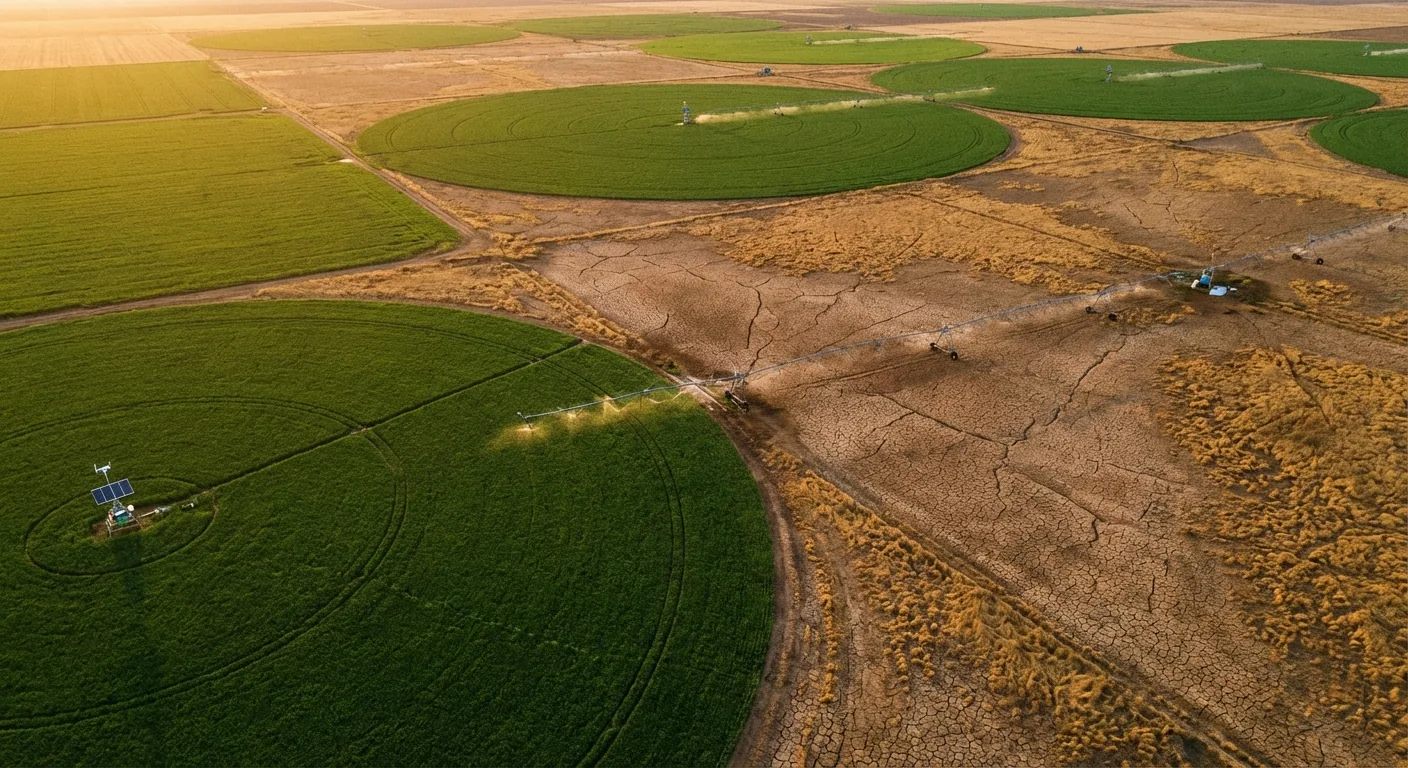
Irrigation, food, and buildings on one platform.
Root-zone probes, wireless climate sensors, and a Controller that runs valves, pumps, vents, and lights on site. See readings and alerts remotely and send the same data to the software you already use.
Vertical 01
Greenhouses and CEA
Root-zone irrigation, canopy climate, and post-harvest rooms on one Controller. Where Growbud started, and still the deepest set of guides on the site.
Closed-loop crop steering, room by room.
Indoor rooms and vertical farms give you control over every variable. Serious operators steer the plant instead of irrigating on a fixed schedule. Growbud runs that strategy automatically: dry-back targets per stage, pulse irrigation by zone, and pore EC tracked in real time across stone wool, coco, and peat.
Canopy temperature, humidity, and CO2 report on the same network as the slab, so the loop knows the air as well as the root. A pulse does not fire into a 2 kPa VPD spike, and CO2 is not dumped through a vent on a timer.
Probes hold their calibration in saline hydroponic systems, and you can check any reading against pot weight in ten minutes. Edge runs the loop on site even when WiFi fails. The same stack scales from one room to multi-facility operations.
Automated dry-back targets
Hit gen and veg dry-back curves without watching the dashboard. Pulses fire from real VWC, every cycle.
Pore EC under control
Track and steer feed strength continuously. Catch lockout and salt buildup before they show on the plant.
Air in the loop
Canopy temperature, RH, VPD, and CO2 on the same timeline as VWC, so irrigation and venting decisions share one set of numbers.
Reservoir pH and EC on the same bus
Wire pH and EC probes into the Controller over RS-485 Modbus and the valve outputs can run dosing pumps, so feed strength is corrected from a measurement instead of a morning check.
Recommended Hardware
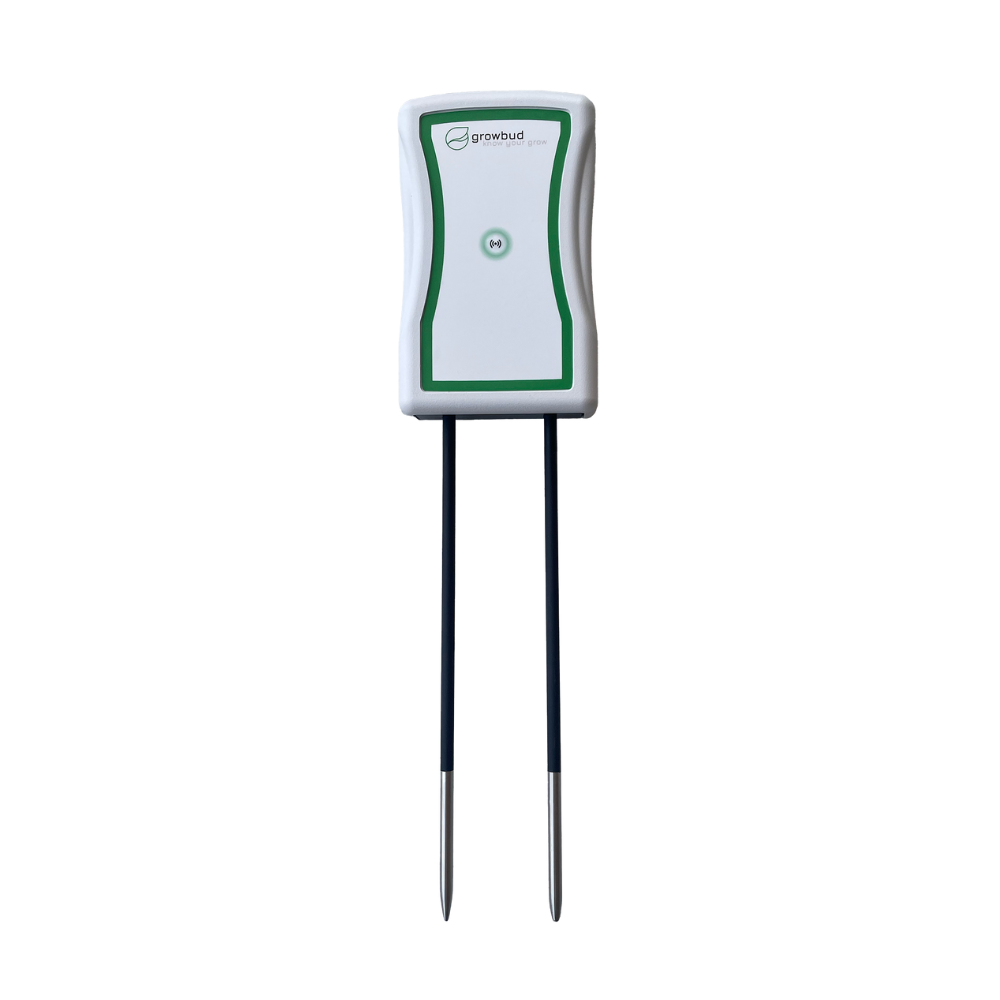
Dro Sensor
VWC, EC, and temperature from complex impedance sensing, mapped to stone wool, coco, and peat
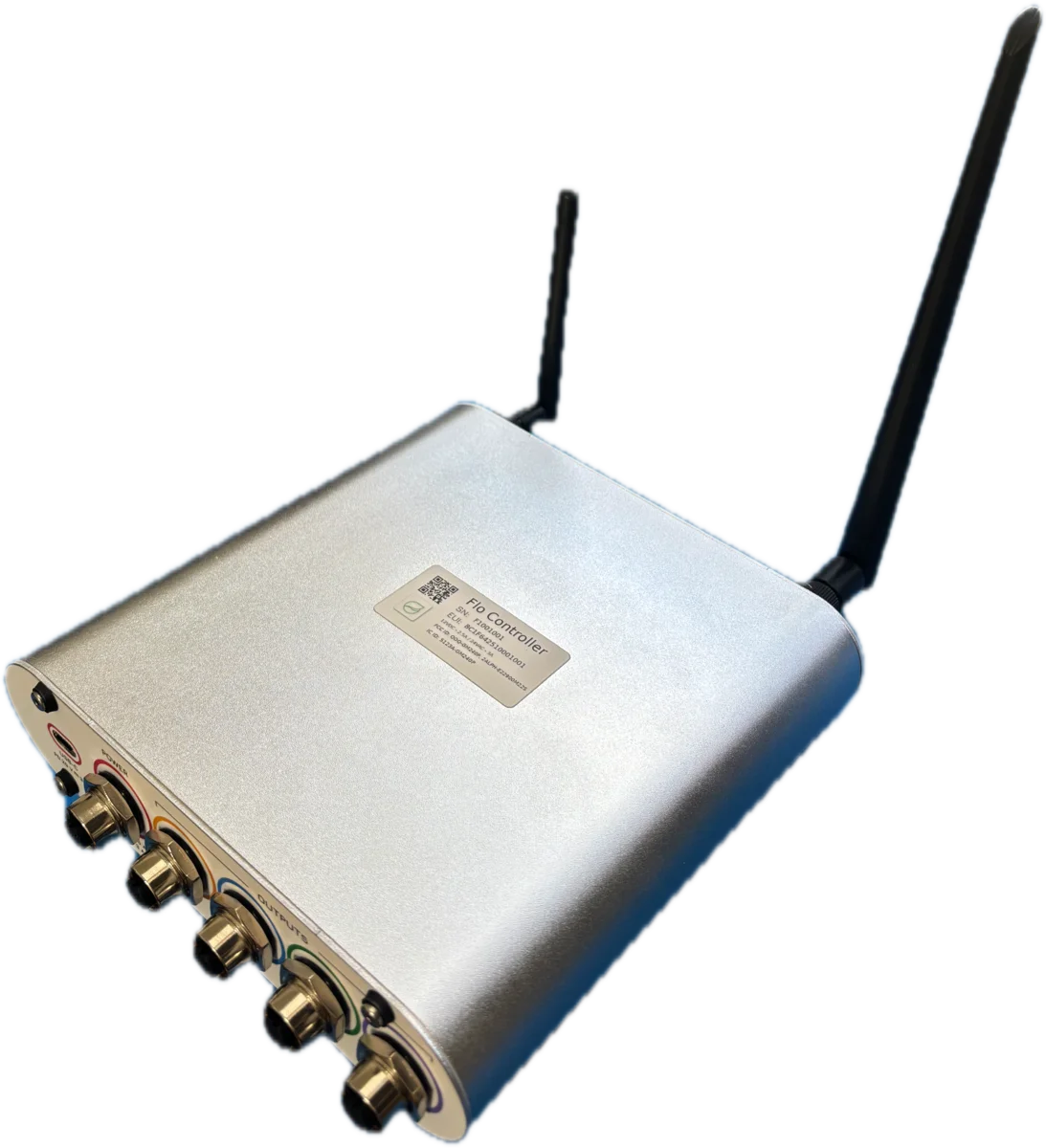
Controller
4-zone valve control that closes the loop, with direct RS-485 sensor inputs
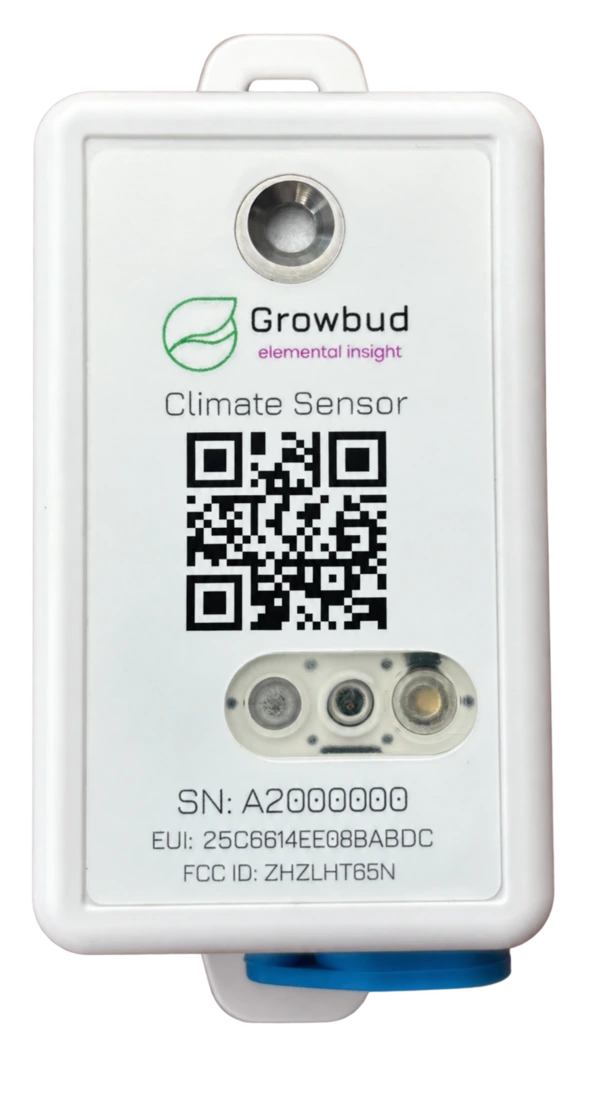
Climate Sensor
±0.3°C / ±3% RH and VPD through the canopy; twelve make a 3D Climate Kit
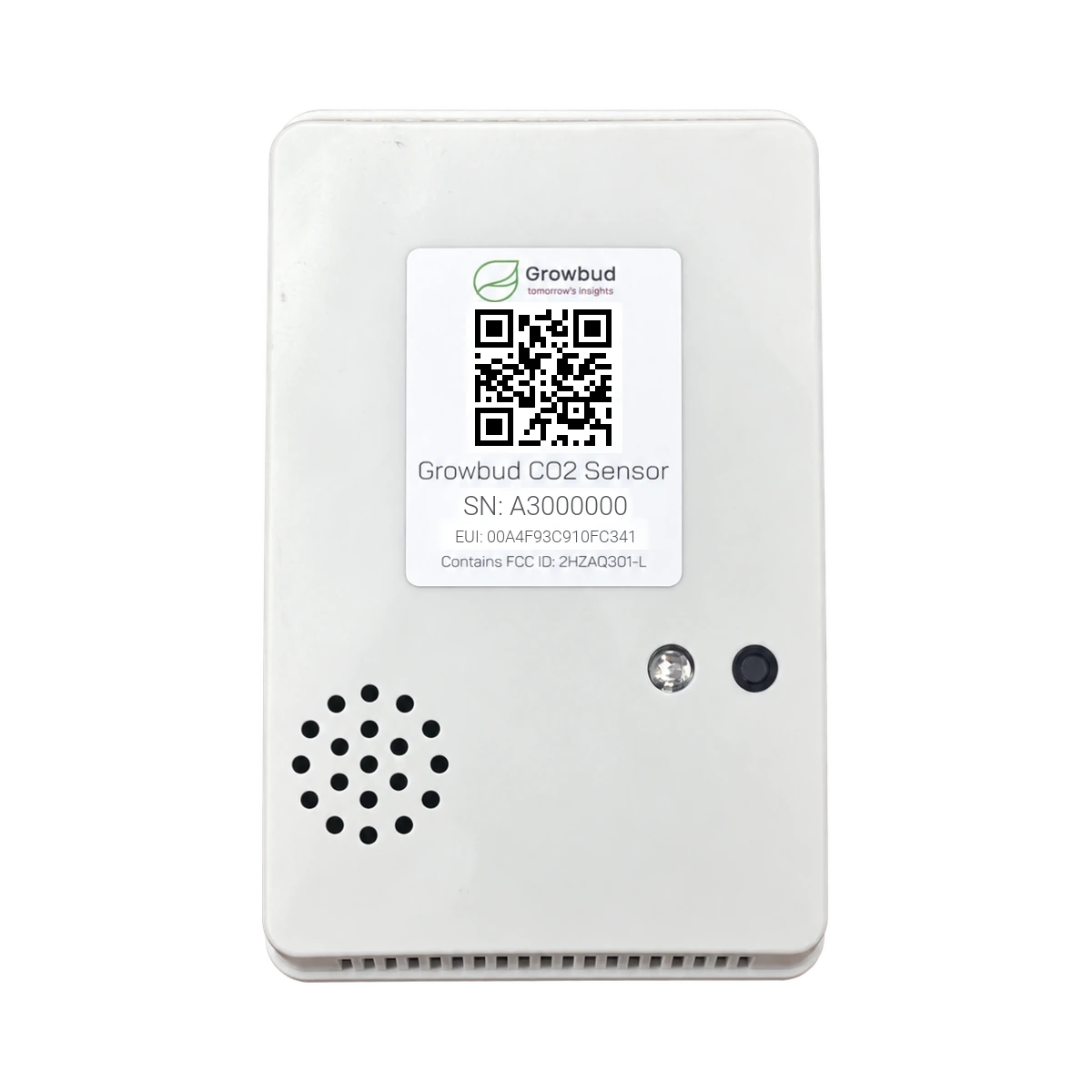
CO2 + Climate Sensor
NDIR CO2 with temp, RH, VPD, and pressure at canopy height
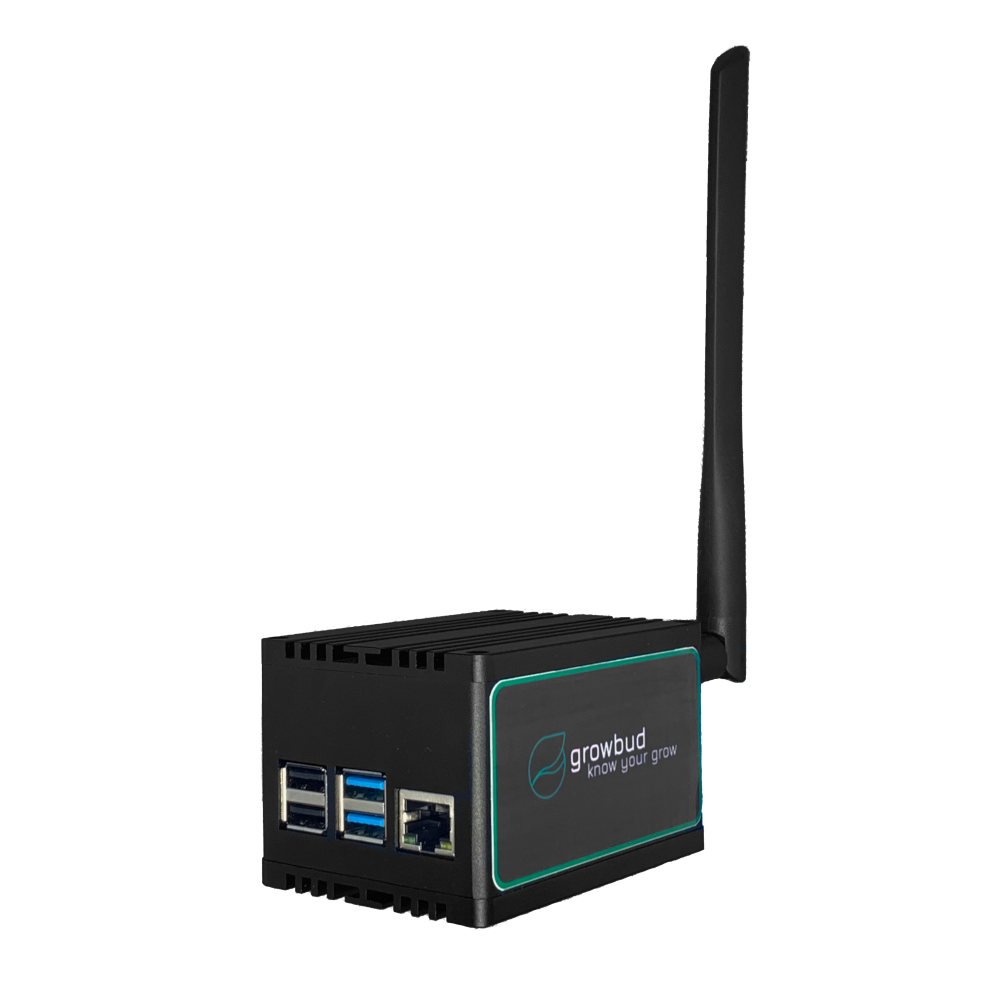
Indoor Gateway
LoRaWAN coverage for every room in the facility
Bench irrigation and canopy climate, on the same numbers.
Greenhouses depend on uniformity. Sun on one wall, microclimates between zones, and drip lines that drift over a season all create variance in yield and shelf life. Growbud closes the loop bench by bench: Dro on the bench reads VWC and pore EC, the Controller on the manifold pulses each zone to its own dry-back, and reservoir pH and EC probes on the same Modbus bus keep the feed you mix and the feed the roots see on one system.
The air is the other half. Microclimates, CO2 enrichment, and night humidity all move the plant, and a wax cylinder on the ridge only knows the temperature at its own ram. Growbud reads temperature, humidity, VPD, and CO2 at the canopy and acts on them: it holds vents closed while CO2 is on, dumps heat on a high-temperature interlock, and cracks airflow when VPD is wrong even if the roof is cool.
Schedules and interlocks run on the Controller, so the house keeps irrigating and venting if the office router dies. Labor that used to walk rows with a moisture probe moves to higher-value work.
Dry-back per bench
Pulses fire from measured VWC on each zone, not from a timer the whole house shares.
VPD and CO2 in the loop
Irrigate and vent from canopy sensors, not from a cylinder that only feels heat at the ram.
Keep enrichment in the house
Vents stay shut while CO2 is on. Temperature is the safety that overrides, and nothing else opens the roof.
Runs if the office router dies
Schedules, interlocks, and dry-back targets live on the Controller and keep running through an outage.
Recommended Hardware
Dro Sensor
VWC, EC, and temperature on every bench, checkable by hand
Controller
Zone valves, pH/EC, and the vent actuators on one Modbus bus, with the Controller as master
CO2 + Climate Sensor
CO2 at the canopy, so enrichment and venting run on a reading
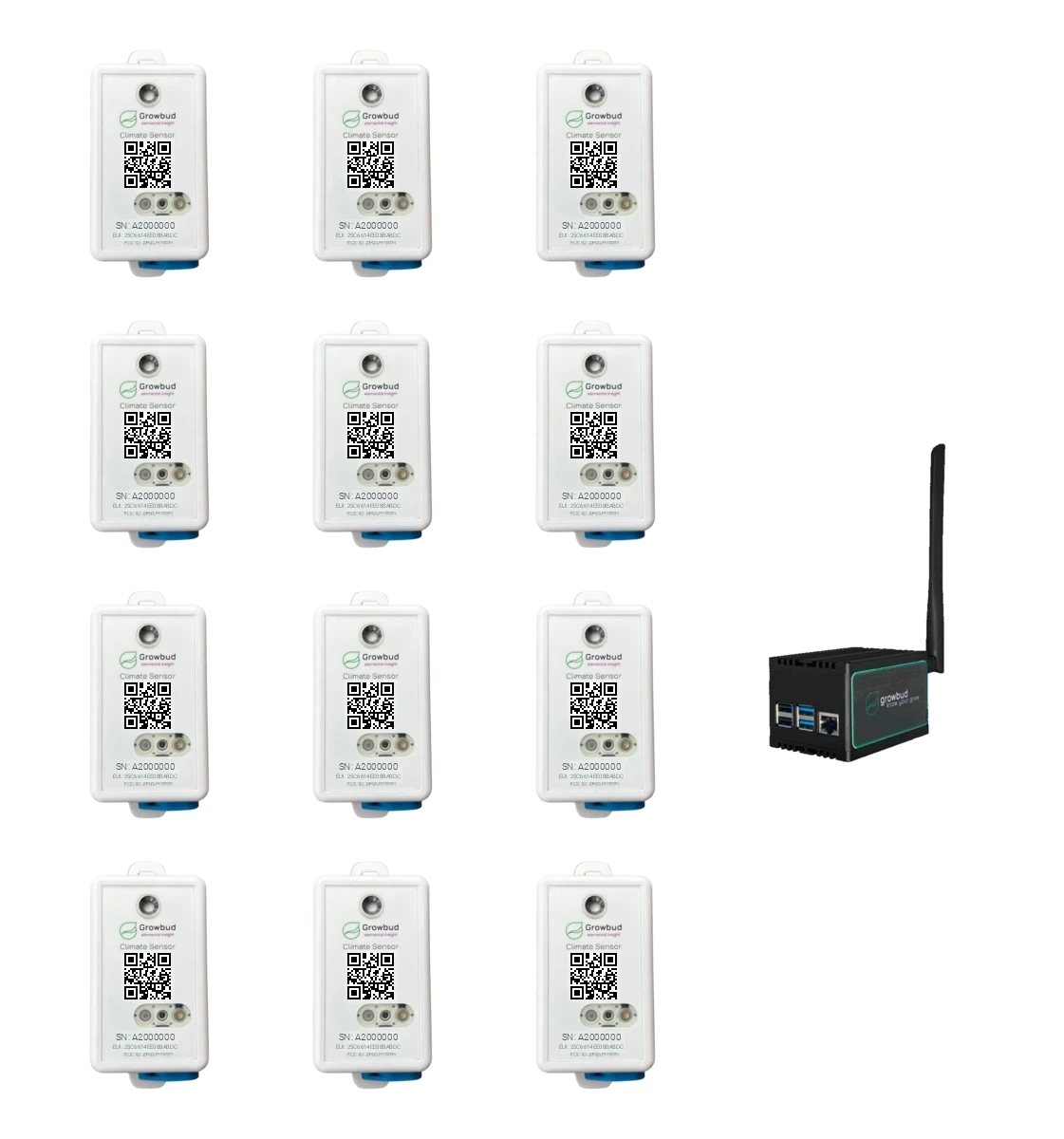
3D Climate Kit
Twelve Climate Sensors map canopy temperature, RH, and VPD in a live 3D view

Greenhouse Vent Kit
Controller, Outdoor Gateway, CO2 sensors, and vent actuators on Modbus or CANopen
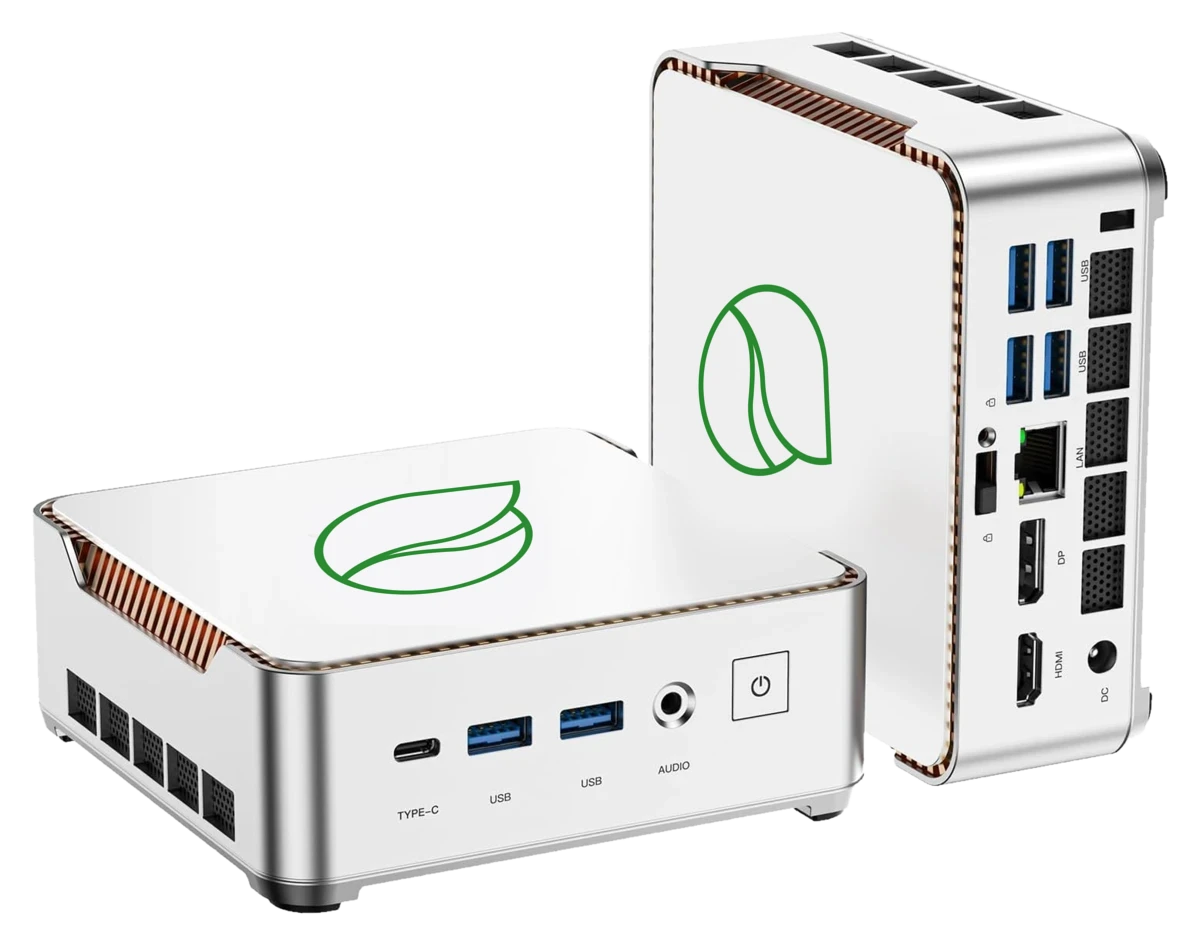
Edge Server
Schedules and interlocks on a $600 box in the head house, with or without internet
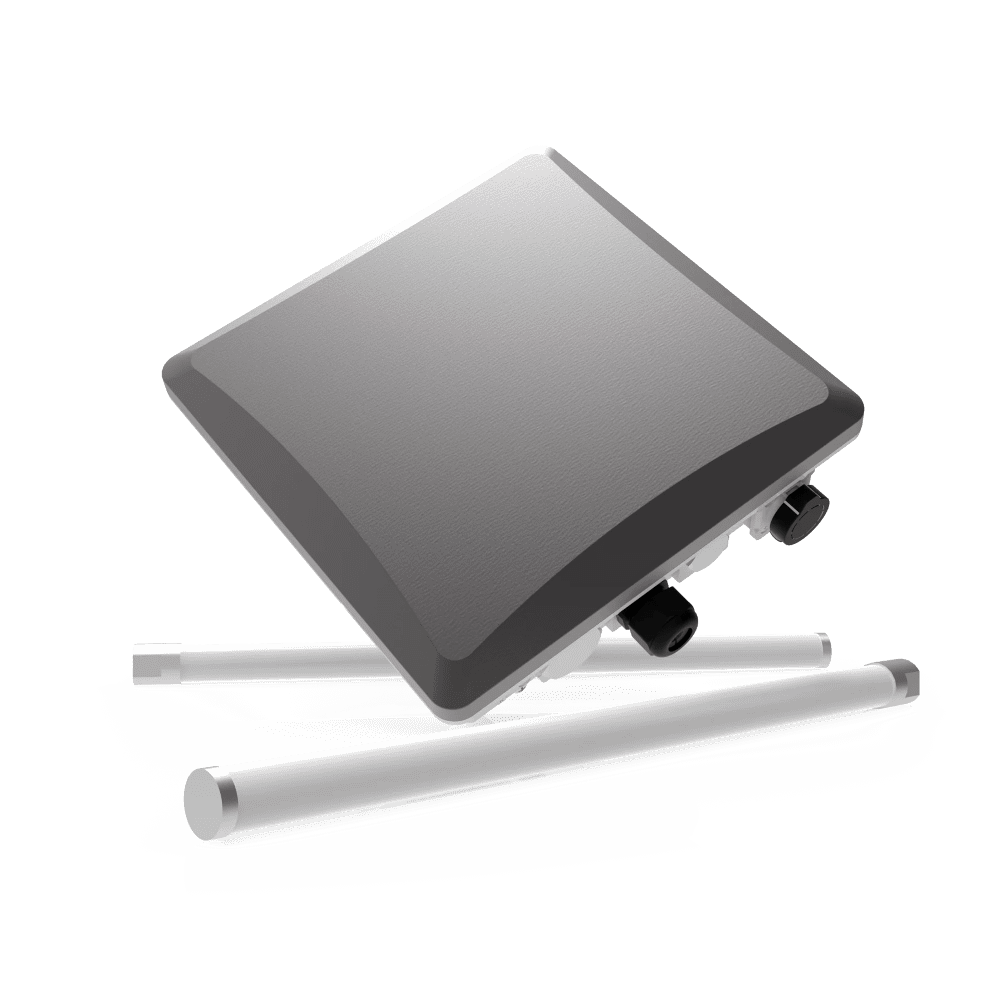
Outdoor Gateway
Solar-powered LoRaWAN coverage across the range
Vineyards, orchards, berry blocks, and turf, watered on the numbers.
Outdoor acreage is where irrigation guesswork costs the most. Deficit-grown wine grapes, almond and citrus blocks under salinity pressure, and berries whose brix and pack-out swing with a few hours of water stress all need better control. Growbud replaces the calendar with substrate-driven control per block, matched to what the roots are doing.
Solar-powered LoRa gateways span the property without WiFi or trenching. Edge sits at the pump house and drives valves to the strategy you set, per block and per varietal. AI predictions flag dry-down or stress before the plants show it. The open API connects to the irrigation controllers and fertigation skids you already own.
Greens, fairways, and sports fields run the same way: root-zone moisture per zone turned into run times, so dry spots get water and wet spots do not, inside a firmness band that holds day after day.
Per-block strategies
Regulated deficit irrigation for grapes, leaching fractions for nuts, VWC bands for berries. Different targets per block, one platform.
Trustworthy in salinity
EC and moisture readings stay accurate where reclaimed water and high-salt soils degrade standard sensors.
Coverage without trenching
LoRa reaches across the acreage. Edge keeps controlling at the pump house even when the cell tower drops.
Greens and fields
Hold turf inside a target moisture band for firmness and uniformity, from the pump house or satellite boxes.
Recommended Hardware
Dro Sensor
VWC, EC, and temperature across irrigated acres, site-calibrated
Controller
Per-block valve control at the pump house. Scheduled actions keep running through outages.
Edge Server
The on-site server at the pump house, running every block's strategy offline
Outdoor Gateway
Solar-powered LoRa coverage at field scale
The air the plant is actually in.
One thermostat on a post reports one point in a room that is never uniform. Warm air pools under the roof, humidity settles between rows, and the corner by the door runs two degrees cold. The 3D Climate Kit places twelve temperature and humidity sensors at known heights and positions and interpolates between them into a live map, so VPD is a shape you can see rather than a number from wherever the sensor happened to be.
Then act on it. Fans and dehumidifiers switch from a Power Meter Outlet on the same long-range wireless network. Vents and shade run from the Controller. Irrigation pulses wait when VPD is out of band. CO2 holds while the vents stay shut. Every one of those decisions runs on site, with the history to show what the room did overnight.
Temperature, humidity, VPD, CO2
The four numbers the canopy responds to, measured where the canopy is, on the same timeline as the root zone.
A spatial map, not a point
Twelve points interpolated into a 3D view: hot spots, humidity pockets, and stratification instead of one reading.
Act without rewiring
Fans and dehumidifiers on the Power Meter Outlet, vents and shade on the Controller, irrigation on the same loop.
Recommended Hardware
3D Climate Kit
12 temp/RH sensors + Indoor Gateway, mapped into a live 3D view
Climate Sensor
Add points to tighten the grid or cover another room
CO2 + Climate Sensor
NDIR CO2 plus temp, RH, VPD, and pressure on the same network
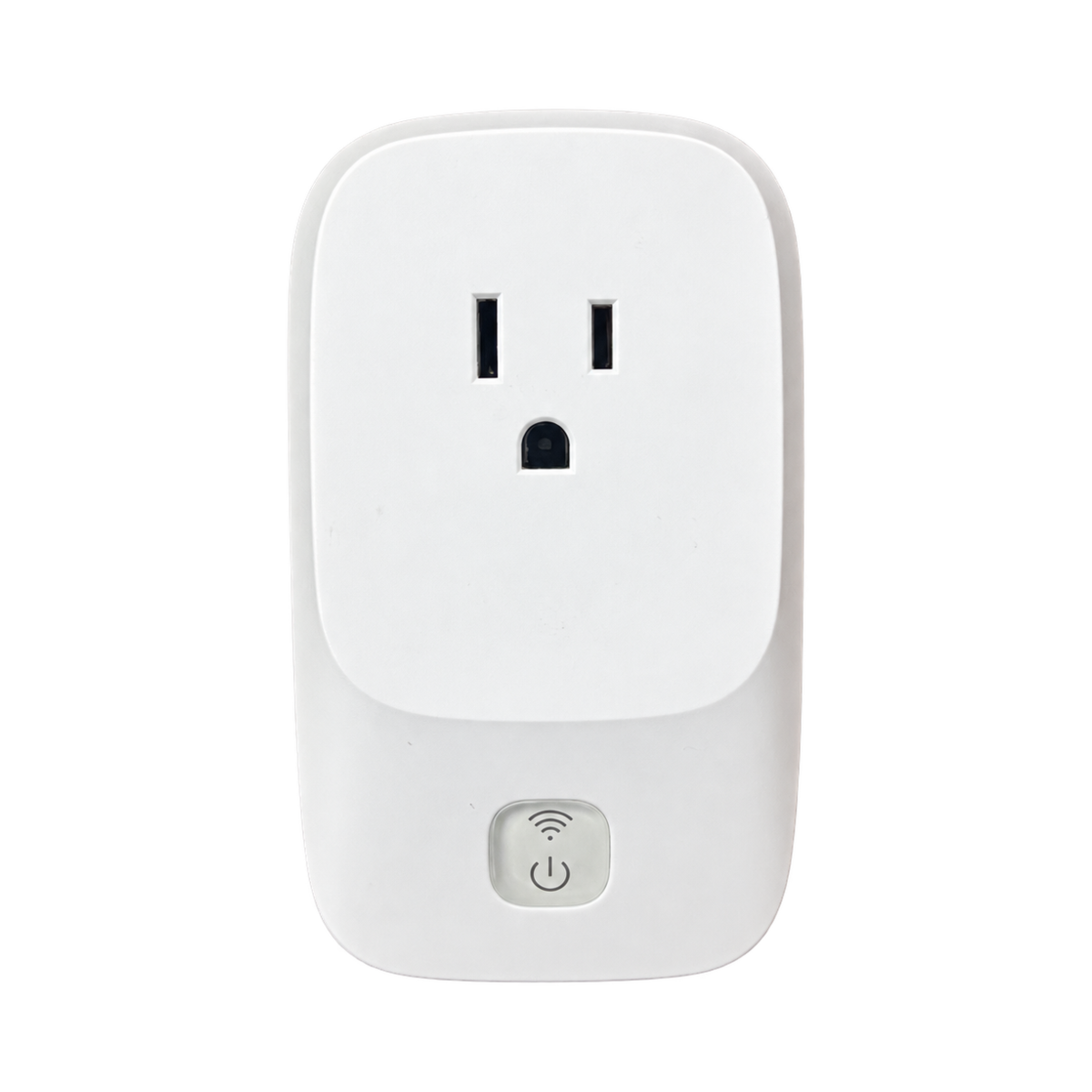
Power Meter Outlet
Long-range wireless outlet that switches and meters fans and humidity gear
Controller
Vents, shade, and irrigation interlocked on one device
Greenhouse Vent Kit
Controller, gateway, CO2 sensors, and an actuator sized to the vent
Same kit, after the harvest.
Drying produce, curing, and barrel aging ride on the same gradients a growing room does: a dead corner drying faster than the rest, humidity settling between racks, warm air under the ceiling. The 3D Climate Kit maps the room the same way, and a fan or humidifier on a Power Meter Outlet corrects it on the reading, no wiring. History and alerts make batch-to-batch comparison and audit trails routine rather than heroic.
Gradients made visible
Hot spots, humidity pockets, and stratification as a 3D map instead of one number on the wall.
Fits damp rooms
IP65 sensors run up to 10 years on a built-in battery, with a port for an external probe into a barrel, tank, or bin.
Close the loop without wiring
Switch fans, humidifiers, and dehumidifiers from a LoRaWAN plug on the network the sensors already report to.
Hold a curing chamber on the numbers.
Dry-cured meat wants a cool chamber and steady humidity, stage by stage. Too dry and the outside case-hardens. Too wet and mold takes hold. A Climate Sensor in each chamber logs temperature and humidity every few minutes on a 10-year battery, and a Power Meter Outlet switches the humidifier, dehumidifier, or fan on the reading.
Every batch gets a history you can compare and export.
Each chamber, logged
Temperature and humidity every few minutes, with a probe port for the chamber or the product.
Humidity held on the reading
Humidifier, dehumidifier, and fan switched from a wireless outlet, no wiring.
A record per batch
History and alerts for every stage, exportable for inspections.
Vertical 02
Commercial buildings
Room-level air, submetering, and leak protection that report into the BMS you already run as ordinary BACnet and Modbus points. Nothing to replace.
Every room's air, not one sensor per floor.
Most buildings sense the air in one place per floor and guess at the rest. Battery-powered temperature, humidity, and CO2 sensors place anywhere, run for years, and report over long-range wireless, so every occupied room, mechanical space, and cold room has its own numbers. A CO2 reading per room shows where ventilation is short before anyone complains, and a walk-in that is drifting shows up hours before the product does.
The readings land in the BMS as ordinary BACnet or Modbus points through the Controller, or stand alone in the Growbud app with history and alerts. Where one number per room is still not enough, the 3D Climate Kit maps a space with twelve sensors at known heights and positions.
Temperature, humidity, CO2
Per room, on a 10-year battery, with a port for an external probe into a walk-in or a duct.
A map where it matters
Twelve points interpolated into a 3D view of a data room, a warehouse bay, or a curing room.
Points in your BMS
Native BACnet and Modbus over the Controller. No gateway licence, no second front end.
Recommended Hardware
kWh per tenant, per circuit, per machine.
One meter at the main tells you what the building burns. It does not tell you which tenant, which panel, or which compressor. DIN-rail Modbus energy meters on the Controller's RS-485 bus cover panels, tenants, and three-phase loads, and the Power Meter Outlet covers anything with a cord, with voltage, current, power factor, and kWh at ±0.5%.
Every electrical thing reports its own condition through the current it draws. Runtime and draw are logged continuously, so a compressor short-cycling, a motor pulling harder as a bearing goes, or equipment left running overnight shows up in the current first. Restaurant and multi-site portfolios see every location on one dashboard, with central alerts and escalation.
Meters without an electrician
The Power Meter Outlet meters and switches at the plug. Split-core Modbus meters clip around a feed without rewiring.
Failures announce themselves early
Short cycling, rising draw, a longer run to the same setpoint. Equipment degrades measurably before it stops.
Any Modbus meter
Single-phase, split-phase, or three-phase meters from any vendor drop onto the same bus and the same BACnet points.
Recommended Hardware
When this, do that. On site, with or without the cloud.
Sensing is half of it. The Controller carries 200 scheduled actions, four valve outputs, relay and Modbus actuators on its bus, and the Power Meter Outlet on the radio, and any reading in the system can drive any of them. The sequences below are ones customers run today. They are examples, not a menu: if you can describe the rule, it can usually be built.
Close the supply valve on a leak, confirm flow actually reached zero, and alarm if it didn't. Run the exhaust fan when a room's CO2 passes a threshold and stop it when it clears. Hold a dehumidifier off during the tenant's quiet hours unless humidity crosses a line. Alert when a walk-in's temperature rises while the compressor's draw stays flat, which means the door is open or the coil is iced. Let the BMS command a pump through a BACnet object and let the Controller refuse the command when the level sensor says the tank is dry.
Verified shutoff
Close the valve, confirm flow reached zero, alarm if it didn't. The sequence runs on the Controller during an outage.
Air that acts
Fans, dehumidifiers, and heaters on the Power Meter Outlet, switched on a reading from any sensor on the network.
Interlocks on the device
Level, flow, temperature, and CO2 conditions that gate an output, evaluated locally with no round trip to a server.
Bring your own device
The Controller already speaks to a large library of Modbus and CANopen sensors and actuators, and drops into an existing system as a Modbus or BACnet device with no app setup. There is a Home Assistant integration too. If a device is missing, email support@growbud.io with the model and we can usually add its profile in days.
Recommended Hardware
Controller
Valves, relays, Modbus and CANopen actuators, leak and flow inputs, 200 scheduled actions
Power Meter Outlet
Long-range switching for anything with a plug, with metering to prove it ran
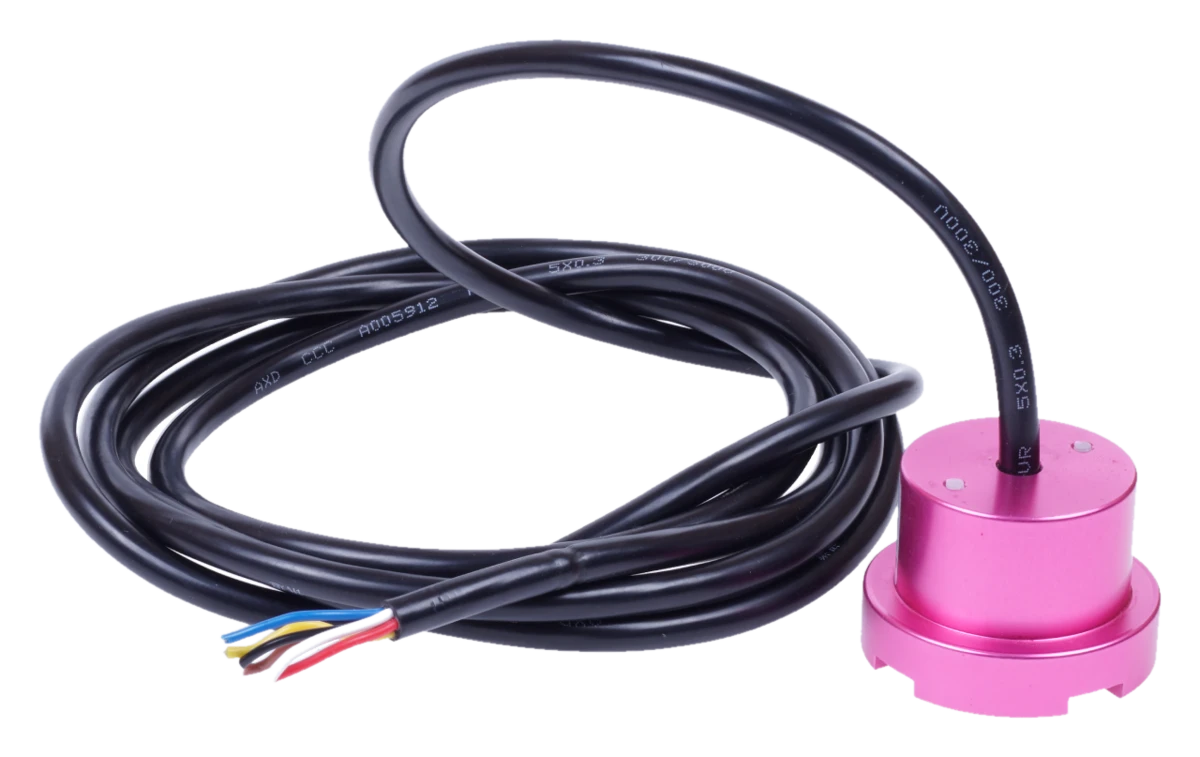
Water Leak Detector
Probe that plugs straight into a Controller leak port
Edge Server
$600 on-site server that runs the rules, isolated or air-gapped, no subscription
Vertical 03
Environmental monitoring
Build an affordable field station around the measurements that matter: water, weather, and site conditions. Start with one sensor, then expand without replacing the Controller.
Reliable readings from the sensors your site needs.
A monitoring site may need water level, conductivity, pH, temperature, weather, or a signal from existing equipment. The Controller reads Modbus RTU sensors on RS-485 and has four universal inputs for 4–20 mA, 0–10 V, pulse, and dry-contact signals. That lets you choose the right instrument for each measurement instead of buying a separate logger for every probe.
Start with one Controller and a sensor, then add instruments as the project grows. A connected Outdoor Gateway brings readings to the Growbud app for remote history and alerts. If a reading should trigger a valve or relay, the Controller can run that rule locally even when the internet is down.
For a third-party sonde or other specialized instrument, we check its power needs, wiring, Modbus registers or output signal, and calibration workflow before recommending a deployment. Tell us the sensor model and the measurements you need.
One station, more measurements
Begin with the probe you need now and add Modbus or universal-input sensors to the same Controller later.
Standard sensor connections
Modbus RTU over RS-485 plus 4–20 mA, 0–10 V, pulse, and contact inputs support a broad range of field instruments.
Local action during outages
Threshold rules run on the Controller, so a connected output can still respond when backhaul is unavailable.
Remote visibility
With a connected gateway, review readings and history and receive alerts in the Growbud app without visiting the site.
Recommended Hardware
Controller
Modbus RTU bus and four universal sensor inputs, with local threshold rules
Outdoor Gateway
Weather-resistant LoRaWAN gateway with cellular or Ethernet backhaul
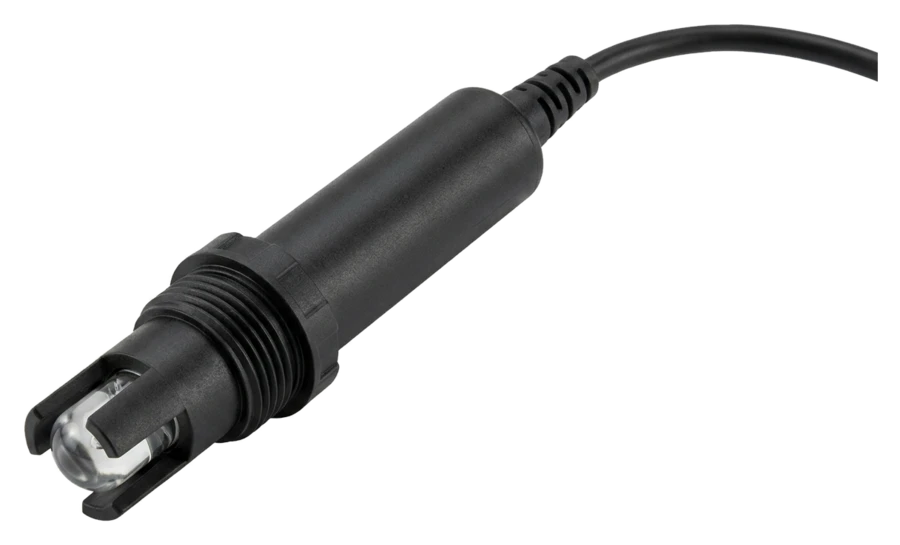
pH Sensor
Wired Modbus RTU probe for water and nutrient measurements
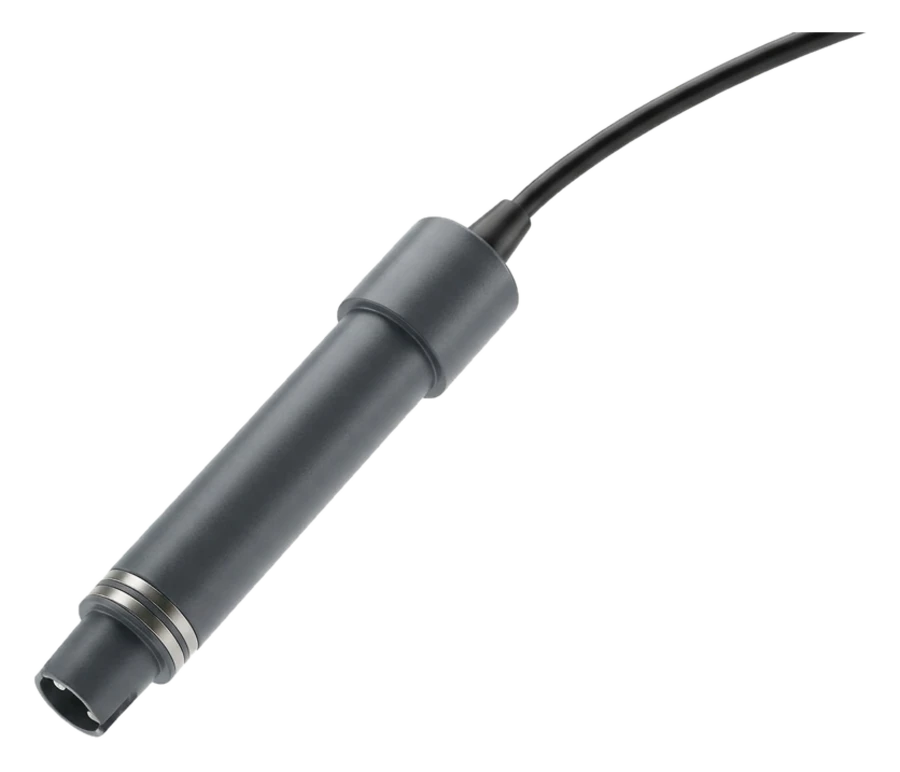
EC / TDS Sensor
Wired Modbus RTU probe for conductivity, salinity, and temperature
Vertical 04
Cold chain and foodservice
Walk-ins, reach-ins, and the compressors behind them, at one restaurant or across a portfolio. The same sensors and Controller used across the platform.
Know a walk-in is failing before the product does.
A walk-in that is drifting warm usually gives hours of warning. A Climate Sensor with an external probe through the door gasket logs the box every few minutes on a 10-year battery, over long-range wireless that reaches the back of the kitchen and the loading dock.
Pair it with the compressor's current. A Power Meter Outlet or a Modbus meter on the feed logs draw and runtime, so short-cycling and a compressor that runs longer to hold the same setpoint show up days early. When the box warms while the draw stays flat, the door is open or the coil is iced, and Growbud says so.
Alerts escalate from the on-site manager to your service vendor, and every location shows on one dashboard. The temperature history exports for inspections and insurance claims.
EVENT LOG · SAME INCIDENT
14:05
Walk-in 2 temp rising · compressor current abnormal
14:07
Alert escalated → on-site manager + service vendor
14:31
Leak sensor B2 wet · supply valve closed automatically
14:31
Valve closure confirmed by flow reading
17:22
Compressor serviced · temps back in range
Illustration of a walk-in compressor failure as it appears in the Growbud app.
Every box, logged
Walk-ins, reach-ins, and prep coolers read every few minutes, with history you can export.
Compressor health from current
Draw and runtime show short-cycling and a failing compressor before the temperature moves.
The right person, early
Alerts go to the manager on shift first and escalate to the service vendor if nobody responds.
Recommended Hardware
Climate Sensor
10-year battery, with a port for an external probe into the box
Power Meter Outlet
Compressor draw and runtime at the plug, ±0.5% kWh
Indoor Gateway
Long-range wireless through cooler walls and across the kitchen
Water Leak Detector
Under ice machines and dish areas, into a Controller leak port
Build the system your site needs.
Start with one kit and add sensors, meters, and outputs as the business grows. Tell us what you want to connect and a person will answer.